
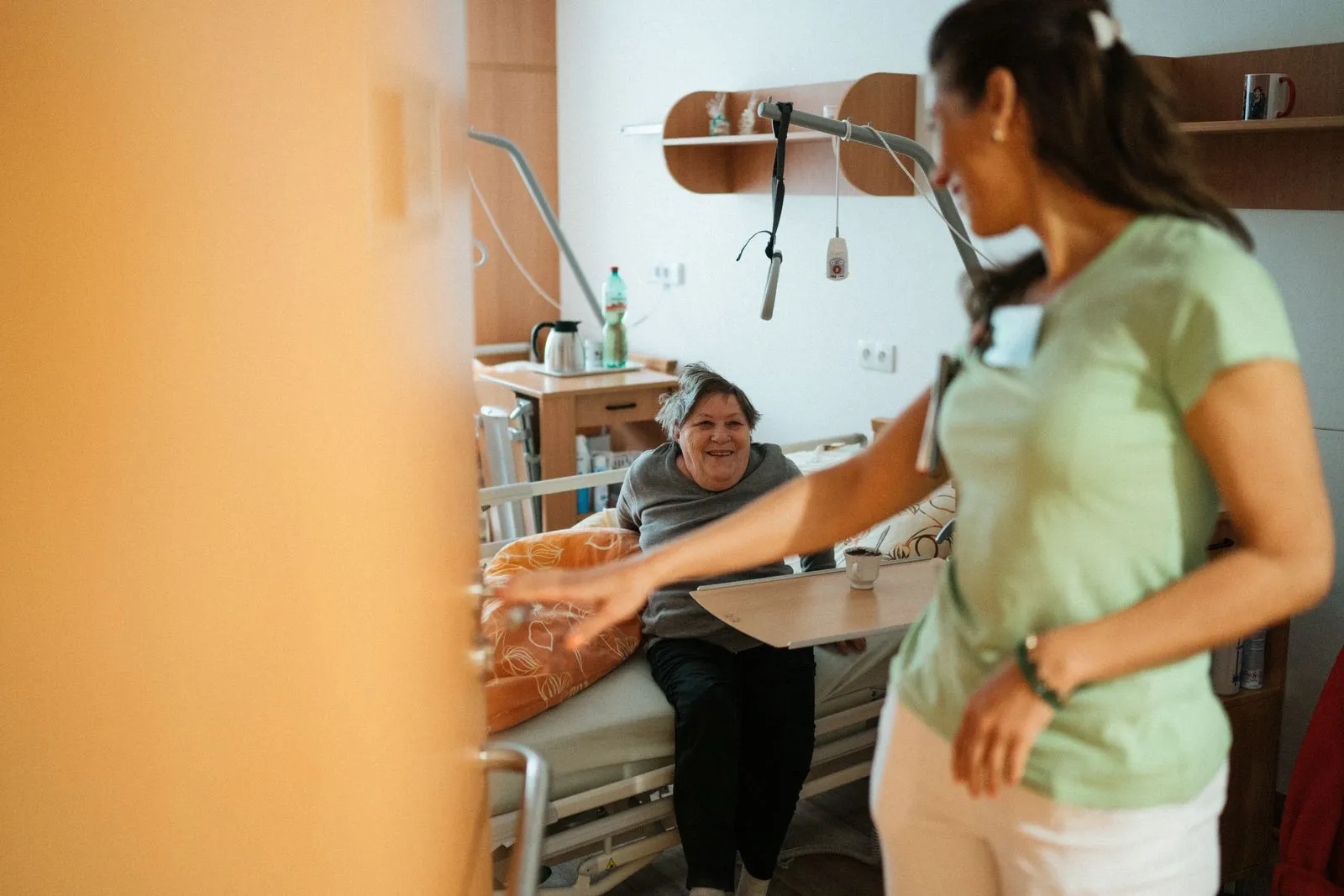
The Centers for Medicare & Medicaid Services wants to hear how an SNF nurse practitioner could take on more of the visits that federal rules now reserve for physicians in a skilled nursing facility (SNF), the Medicare-certified side of a nursing home. The request sits inside a 134-page proposed rule, CMS-3484-P, published in the Federal Register on November 10, 2026. It isn't a rule change yet. CMS is asking questions, and comments are due January 11, 2027.
What CMS asked about nurse practitioners in nursing homes
The request is short. CMS says it is "seeking information regarding expanding the scope of practice of physician assistants and nurse practitioners providing care in SNFs, especially as it pertains to performing visits currently required to be made by a physician." It then lists what it wants commenters to tell it:
- What makes it hard for patients to get admitted to an SNF.
- What roles nurse practitioners and physician assistants fill now, and how they could ease those admission problems.
- Specific examples of nursing home physicians working with NPs and PAs, and the measured effect on residents' outcomes and safety, including NP and PA visits after the physician's first visit.
- What residents and their families prefer: a physician, a physician assistant or a nurse practitioner.
- State and local restrictions that would stop a facility from using any new federal flexibility.
CMS gives its reasons in the same section. It cites Census Bureau figures that the number of Americans over 65 will rise from 54 million in 2019 to 95 million by 2060. It also cites a JAMA analysis putting board-certified geriatricians at 10,270 in 2000 and 7,413 in 2022. The rule counts about 15,000 long-term care facilities caring for about 1.25 million residents a day as of January 2026.
Read the request for what it is. It's a list of questions, and the amendatory text at the end of the rule doesn't touch the physician services regulation at all. Any change to what a nurse practitioner may do in an SNF would come in a later rule, after CMS reads the comments.
The rest of CMS-3484-P cuts requirements CMS calls obsolete or burdensome across the facilities it certifies, and it estimates the whole rule saves about $320 million a year. The SNF comment request is the one place it asks what a nurse practitioner should be allowed to do.
Key dates for the SNF nurse practitioner comment request
| Date | What happened | Source |
|---|---|---|
| November 10, 2026 | CMS publishes proposed rule CMS-3484-P in the Federal Register, with the NP and PA comment request in it. | Federal Register 2026-22812 |
| January 11, 2027 | Comment period closes. Mailed comments must arrive by this date. | Federal Register 2026-22812 |
| After January 11, 2027 | CMS reviews comments. Any change to 42 CFR 483.30 would need a later rule. | Regulations.gov docket |
What a nurse practitioner can do in a skilled nursing facility today
The federal rule is 42 CFR 483.30, "Physician services." It applies to every nursing home certified for Medicare or Medicaid, and it treats the two certifications differently. A skilled nursing facility (SNF) is the Medicare certification. A nursing facility (NF) is the Medicaid one. A single building can hold either or both.
| Task | In an SNF (Medicare) | In an NF (Medicaid) |
|---|---|---|
| Approve admission | A physician, personally and in writing | A physician, unless the state opts in under 483.30(f) |
| Orders for immediate care on arrival | A physician, PA, NP or clinical nurse specialist | A physician, PA, NP or clinical nurse specialist |
| First required visit | The physician, in person | Can be an NP if the state opts in |
| Later required visits | May alternate between physician and NP, at the physician's option | Can be an NP if the state opts in |
| Other delegated tasks | Allowed if the NP is under physician supervision and within state scope | Any required physician task, if the state opts in |
The visit schedule is the part most of this request is about. A resident must be seen by a physician at least once every 30 days for the first 90 days after admission, then at least once every 60 days. A visit counts as on time if it happens no later than 10 days after it was due. In an SNF, the physician makes the first of those visits, and after that the physician may choose to alternate with a nurse practitioner. It's the physician's choice, not the NP's and not the facility's.
In a Medicaid nursing facility, a state can go further. Under 483.30(f), any required physician task, including the ones the regulation says a physician must do personally, can be done by a nurse practitioner who is not an employee of the facility and who works in collaboration with a physician. CMS called this out as "a notable difference" between the two settings.
Why the Social Security Act limits what CMS can change
CMS writes that "in certain cases, Federal statute limits our ability to make changes through regulation." Two sections of the Social Security Act explain the gap in the table above.
- Section 1819(b)(6)(A) says an SNF must "require that the medical care of every resident be provided under the supervision of a physician." It names no one else.
- Section 1919(b)(6)(A) says the same for nursing facilities, then adds: "or, at the option of a State, under the supervision of a nurse practitioner, clinical nurse specialist, or physician assistant who is not an employee of the facility but who is working in collaboration with a physician."
That parenthesis is the whole difference. Congress wrote a state option into the Medicaid section and left it out of the Medicare one. CMS says so directly: "the Act does not allow for this delegation in SNFs." So the agency framed its request as expanding nurse practitioner scope in SNFs "within our current statutory limitations."
CMS has not said which parts of 483.30 it could change on its own. The statute requires physician supervision of an SNF resident's medical care. The specific visit rules, a physician making the first SNF visit and later visits alternating with an NP only at the physician's option, are written in the regulation, 483.30(c). Which of those CMS reads as fixed by the statute is the question its comment request leaves open.
Your state license still decides what you can do in the building
Even if CMS loosens 483.30, a nurse practitioner working in an SNF still has to stay inside state law. The regulation says so twice. A delegated NP must be "acting within the scope of practice as defined by State law," and a physician may not delegate a task "when the delegation is prohibited under State law or by the facility's own policies."
That gives you three layers to check.
- Federal rules for the building. In an SNF, a physician supervises every resident's medical care. This holds even in a state that gives nurse practitioners full practice authority. A state license can't override a Medicare condition of participation.
- Your state license. Whether you need a collaborative agreement with a physician, and what it must contain, is set state by state. So is whether you can prescribe controlled substances on your own.
- The facility's own policies. A nursing home can refuse delegation the state and federal rules would allow.
The last of CMS's questions goes straight at the second layer. It asks which state and local restrictions would block any new federal flexibility. If CMS opens a door, some states would leave it shut. Our FNP scope of practice guide shows where each state stands on full, reduced and restricted practice.
Who employs nurse practitioners in nursing homes, and what they earn
The Bureau of Labor Statistics counts nurse practitioners by the industry of their employer. In May 2025 it counted 1,520 nurse practitioners employed directly by nursing care facilities. That count leaves out every nurse practitioner who sees nursing home residents while on the payroll of a physician practice or a medical group: BLS files them under that employer instead.
| Employer | NPs employed | Median | Bottom 10% | Top 10% |
|---|---|---|---|---|
| Nursing care facilities | 1,520 | $129,630 | $79,170 | $176,660 |
| Offices of physicians | 148,600 | $129,190 | $100,000 | $166,060 |
| Home health care services | 11,600 | $129,460 | $95,060 | $215,280 |
The median in nursing care facilities sits within a few hundred dollars of the median in physician offices. The spread is wider at the bottom: the lowest-paid tenth of nursing home NPs earn under $79,170. Our guide to NP pay by work setting covers the other employers.
If CMS later lets nurse practitioners make more of the required SNF visits, facilities and medical groups would have a reason to hire more of them. That's a possibility, not something the rule says.
How to send CMS a comment by January 11, 2027
Anyone can comment, students included. CMS takes comments three ways, and it asks you to pick only one:
- Online at regulations.gov, docket CMS-2026-3631, using "Submit a comment."
- Regular mail to Centers for Medicare & Medicaid Services, Department of Health and Human Services, Attention: CMS-3484-P, P.O. Box 8010, Baltimore, MD 21244-8010.
- Express or overnight mail to Centers for Medicare & Medicaid Services, Department of Health and Human Services, Attention: CMS-3484-P, Mail Stop C4-26-05, 7500 Security Boulevard, Baltimore, MD 21244-1850.
Refer to file code CMS-3484-P. Mailed comments have to arrive by January 11, so a letter sent the week before may miss it.
Two things to know before you write. Every comment is posted publicly, along with any personal information you put in it. And CMS asked for evidence: specific examples of NP and physician collaboration and their measured effect on residents. A clinical rotation in a nursing home gives you something concrete to say. A comment that just says yes or no to more NP scope gives CMS less to use.
What this means if you’re studying to be an FNP
Nothing changes for you this semester. The federal rules for SNF visits are the same today as they were last week, and a final rule that rewrites them, if one comes, is at least months away.
What the request tells you is where federal policy is looking. CMS put its concern in plain numbers: more older adults, fewer geriatricians. If you want to work with older adults, compare the FNP and adult-gerontology primary care tracks before you apply. An FNP can see residents of any age, while the AGPCNP concentrates your clinical training on adults and older adults. Our comparison of NP specialties walks through that choice.
Three practical steps. Ask programs you're considering whether they place students in long-term care for clinical hours. Read the rule for the state you plan to practice in, because the federal SNF rule and your state license stack on top of each other. And if you've already done a nursing home rotation, you have the kind of first-hand example CMS asked for, so consider sending a comment before January 11.
Frequently asked questions
Can a nurse practitioner admit a patient to a skilled nursing facility?
How often must a physician see a nursing home resident?
Did CMS change what nurse practitioners can do in nursing homes?
Does full practice authority let an NP work without a physician in an SNF?
Can a family nurse practitioner work in a nursing home?
Sources
- CMS, Medicare and Medicaid Programs; Cutting Administrative Requirements for Excellence in Patient Care (CMS-3484-P), Federal Register 2026-22812 (primary source), read November 10, 2026.
- Regulations.gov, docket CMS-2026-3631 (primary source), read November 10, 2026.
- eCFR, 42 CFR 483.30, Physician services (primary source), read November 10, 2026.
- 42 U.S.C. 1395i-3 (Social Security Act section 1819), requirements for skilled nursing facilities (primary source), read November 10, 2026.
- 42 U.S.C. 1396r (Social Security Act section 1919), requirements for nursing facilities (primary source), read November 10, 2026.
- BLS, Occupational Employment and Wage Statistics, May 2025, nurse practitioners by industry (primary source), read November 10, 2026.